
Cost GuidePatios & Hardscape · 8 min read
Paver Patio Cost in Columbus and Central Ohio: What Our Patios Really Cost
What a paver patio costs in Columbus and Central Ohio, from the patios we sold from 2021 to 2026, in today's dollars: price per square foot, totals by size, and what moves the price.
By David Peabody · September 14, 2026 · Updated November 2, 2026
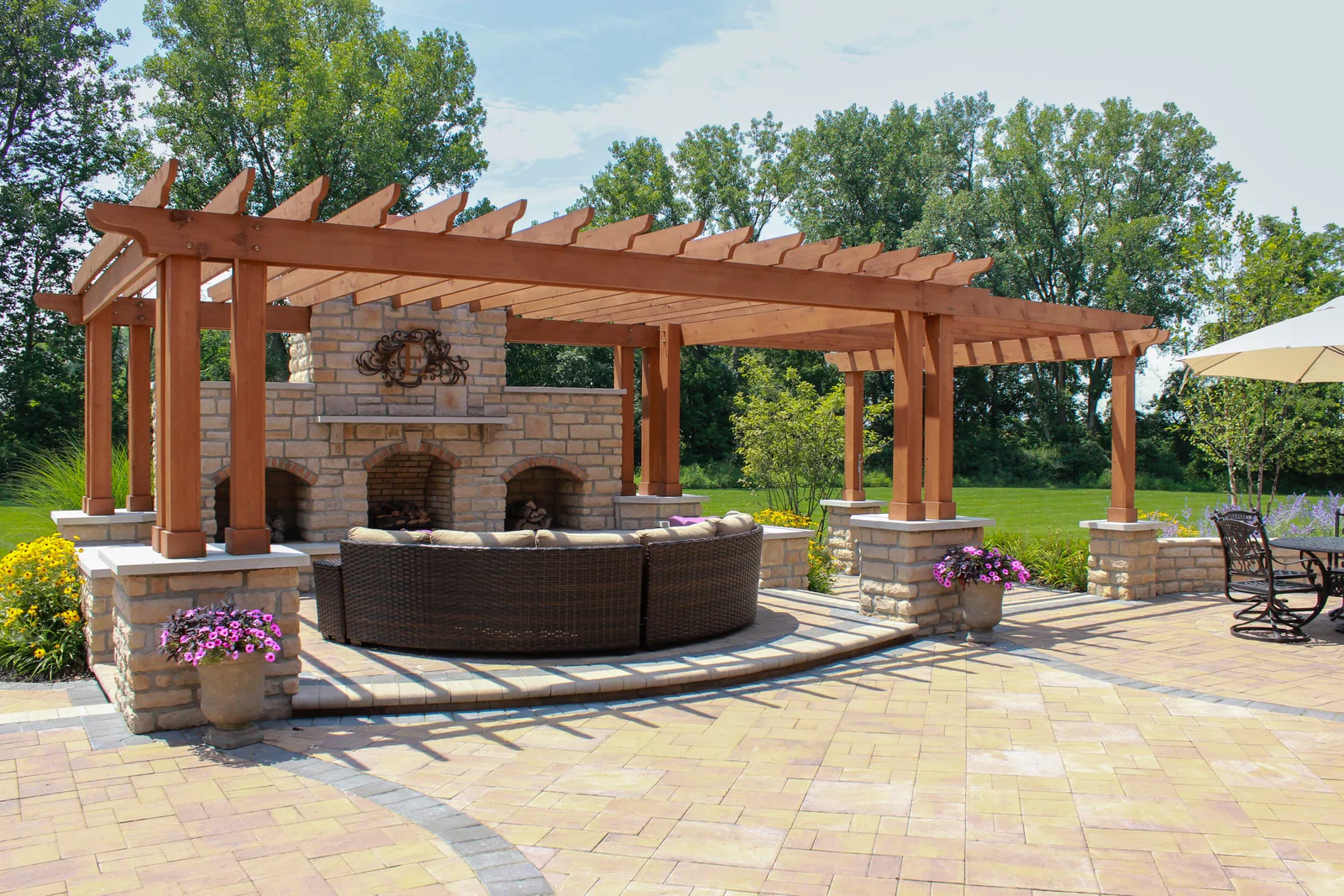
How much does a paver patio cost in Central Ohio?
A paver patio from our crews has cost about $30 to $45 a square foot, installed, in today's dollars. The middle half of our patios came in between $13,000 and $28,000, and the patio in the middle of our list was about $22,000.
Those figures come from some of the concrete paver patios our residential design and build team sold from 2021 through 2026, for homes in Columbus and across Central Ohio. I would rather show you what our own customers paid than repeat a national average.
All in all, our numbers cover the patio work: the labor and equipment, base stone, joint sand and pavers, and almost always the edge restraint. Steps, walls, fire features, lighting and planting were priced separately; they are further down.
- Per square foot: about $30 to $45, installed.
- Total for the patio: about $13,000 to $28,000. The patio in the middle of the list was about $22,000.
Where do these numbers come from?
We went back through every concrete paver patio our residential design and build team sold from 2021 through 2026, with older prices brought up to today's dollars using what our own costs have risen since. Unless we say otherwise below, each range on this page is the middle half of what we sold; the other half fell above or below it.
Where a fair range would take more jobs than the ones in front of us, we leave it out rather than guess.
These are our prices, not a national average. Permits are not in them. Our design fee is $500, and we waive it when you build the design with us.
Why does our price run higher than national cost sites?
National cost sites often list paver patios well below $30 a square foot. We think most of the difference is in what sits under the pavers and who builds it.
A patio lasts because of the base under it. We dig out the soil, compact the stone base in layers and pitch the surface so rain runs away from the house rather than under the pavers. Edge restraint holds the pavers in place, and drainage goes in before the surface does. That base is what keeps a patio flat and the joints tight after years of Central Ohio freeze and thaw.
That work is most of the price. On the patios we sold, labor and equipment made up about 40 to 55 percent of the patio price; the base stone itself was only about 2 to 5 percent. The pavers you see are a smaller part of the cost than most people expect.
The people who walk your yard and draw the plan work for the same company that builds your patio. Normally the same crew stays from the first day to the last, and the site is cleaned every day. And as anybody knows, the devil is in the details, and the details are what you are paying for.
How does size change the cost of a paver patio?
The patio in the middle of each size group ran about $35 to $37 per square foot, so the total mostly follows the area. Doubling the size of a patio roughly doubles the price.
Settle the size first. Think about the table and chairs you plan to use, the grill, and enough room to walk around them. That one decision sets most of the budget.
- 200 to 400 sq ft: about $9,000 to $22,000.
- 400 to 800 sq ft: about $17,000 to $25,000.
- Over 800 sq ft: about $36,000 to $47,000.
Pavers, natural stone or brick: which costs more?
Both pavers and natural stone last when the base is built correctly, so the choice comes down to the look you want and how it sits with the house. We will give you our honest recommendation when we walk the property.
- Concrete pavers: about $30 to $45 per square foot. They give a clean, consistent surface in a wide range of colors and patterns, and a damaged piece can be lifted and replaced.
- Natural stone: about $45 to $65 per square foot. Bluestone and flagstone have more variation and a more classic look.
- Clay brick: about $31 to $46 per square foot. We have laid only a few brick patios, so this range is built up from our labor rates and supplier prices rather than from past jobs.
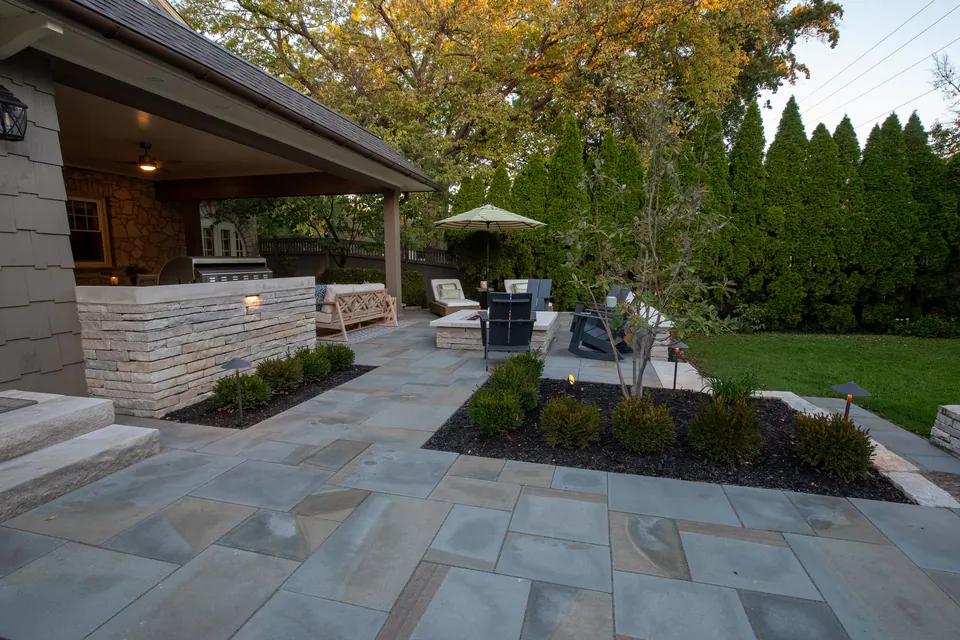
Does a border or pattern add to the cost?
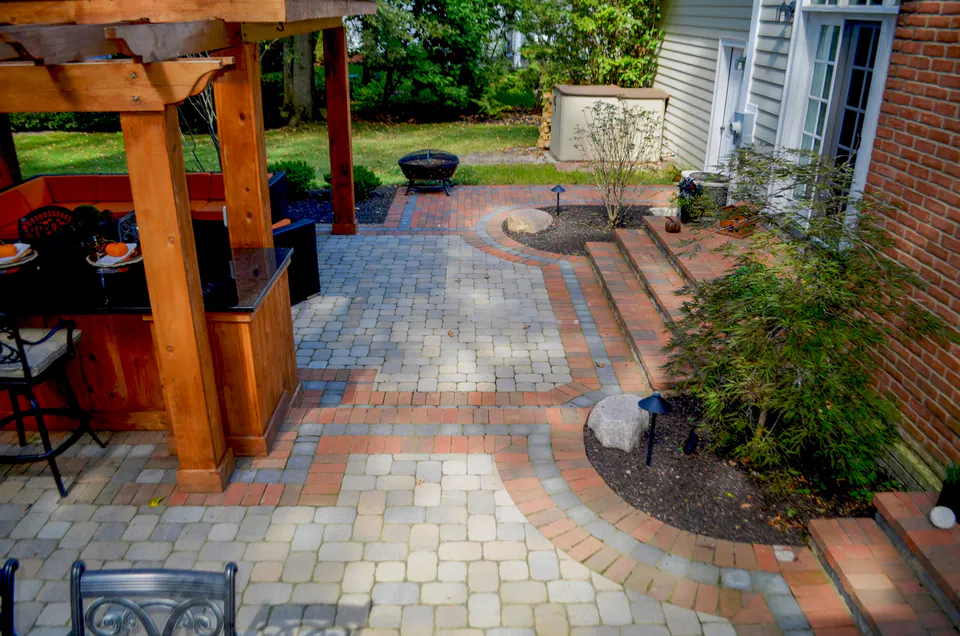
A border means a second paver and more cutting. On our patios, though, it did not move the price much: the patio in the middle of the list ran about the same per square foot with a border as without one. Choose it for the look.
Most patterns cost about the same. Herringbone is the exception: it lays slower and takes more cuts along every edge, so we figure about $2 to $3 more per square foot.
Why do the base and drainage matter so much?
What you pay for most is the part you will never see. The excavation, the compacted base and the edge restraint are the same work whichever paver goes on top.
Drainage belongs in the first conversation. A patio has to drain away from the foundation and tie into the lawn and beds without a low spot that holds water. We would rather address a drainage problem during the first walk-through than discover it while we are building. Choosing a different paver does not fix a drainage problem.
- Drainage priced as its own item: about $2,000 to $6,000.
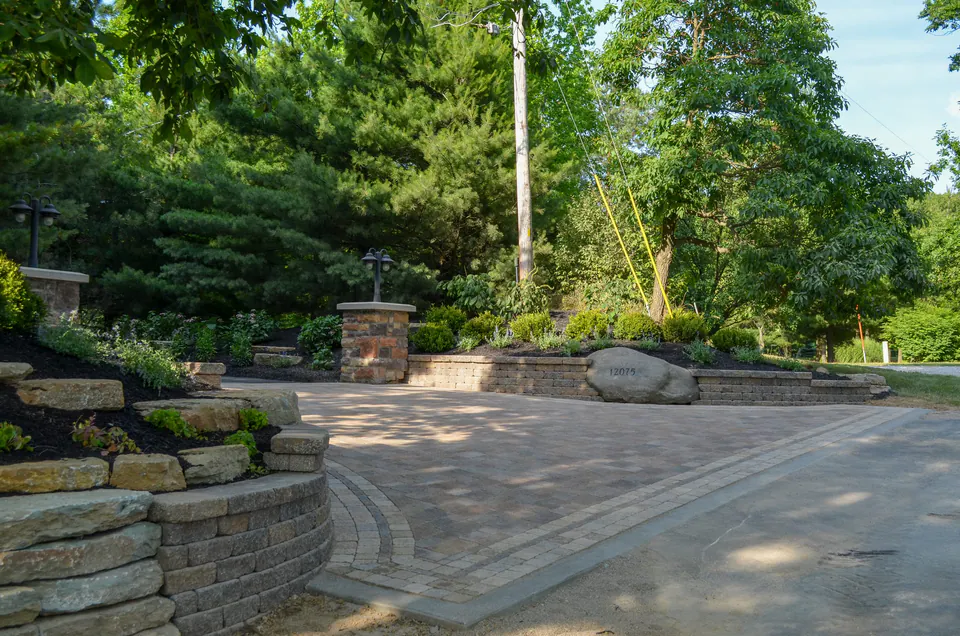
What do steps, seat walls, fire pits and lighting add?
Each of these was priced as its own item on the same sold jobs:
When lighting, planting or a fire feature is part of the plan, we design them with the patio, so wiring, gas lines and drainage go in with the base instead of being cut in later.
- Steps: about $3,000 to $9,000
- Seat walls: about $4,000 to $17,000
- Fire features: about $2,000 to $9,000
- Lighting: about $2,500 to $4,500
What did three real patios cost?
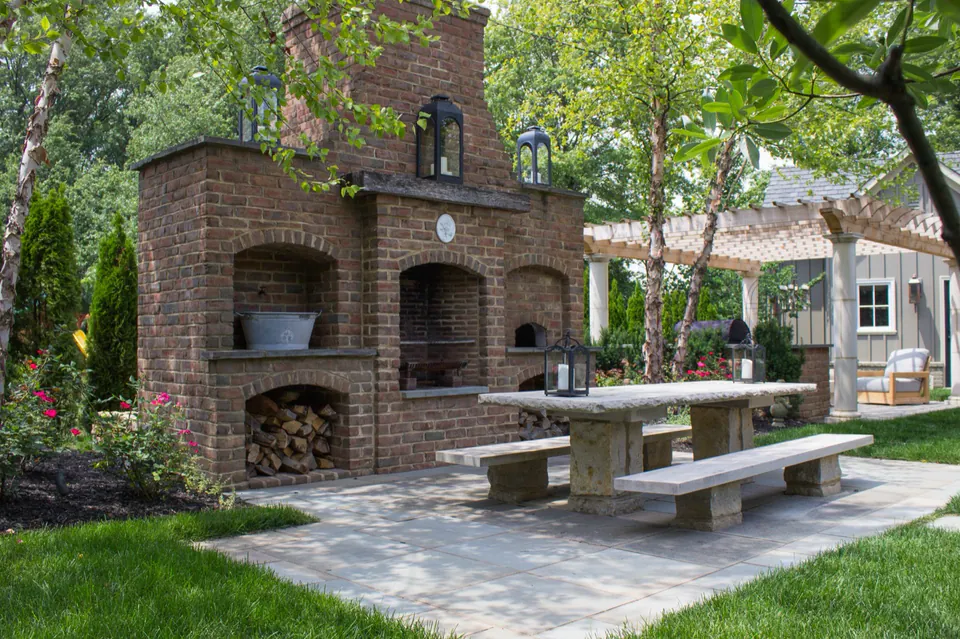
These are three real patios from the records above, picked to show a small, a middle and a large job. Prices are for the patio only, in today's dollars.
- A small patio, 2025: about 215 square feet, concrete pavers, no border.
- About $8,100, or $38 a square foot.
- A middle patio, 2024: about 515 square feet, concrete pavers, no border.
- About $17,900, or $35 a square foot.
- A large patio, 2024: about 1,220 square feet, concrete pavers, no border.
- About $38,400, or $31 a square foot.
What is usually not included in a patio price?
A quote should say plainly what it includes. Ask about each of these:
- Removing an old patio, concrete or turf, and hauling it away
- Regrading the yard around the patio
- Drainage beyond the patio itself
- Steps, walls, fire features and lighting
- Planting and lawn repair around the new edges
- Permits, where your city requires one
How long does it take to build a paver patio?
Once a patio is on the schedule, the build itself is days, not months. On our jobs, a patio of 200 to 400 square feet has taken a crew about three days on site. A patio of 400 to 800 square feet has taken about a week, and larger patios have taken one to two weeks. Steps, walls, demolition and weather add to that. When we can start depends on how busy the season is and how big the job is.
The best time to plan is fall and winter. Designing then puts your project near the front of the spring build schedule. If you would like a spot on that schedule, send us a note through our contact page or call us at (614) 488-2877.
- Walk it and design it. We look at the doors, the grade, where water goes after rain, sun and shade, and how you want to use the space. The design sets the size, shape and finished height before anything is ordered.
- A written proposal. Before we dig, you get a written proposal that lists what we will build, the order of the work and roughly how long each part takes. If you want to change something along the way, we agree on it with you first.
- Build the base right. Excavation, compacted stone base, edge restraint and drainage go in first.
- Finish and walk it together. Pavers or stone are set and the joints filled. Before we call the job done, we walk the finished patio with you and finish anything that still needs it.
How do you take care of a paver patio?
A well-built patio needs little. We recommend keeping the joints topped up with sand, which holds the pavers tight against each other. Our hardscape work is guaranteed for one year from installation, or for the paver maker's longer warranty where there is one. Settled pavers or stone can be reset if the material is still sound: we lift the surface, rebuild the base, reset the stone or pavers, and correct drainage where needed.
What should you ask a patio contractor before you sign?
Whoever you hire, these are worth asking before you sign:
- What is under the pavers, how deep is the base, and how is it compacted?
- What holds the edges in place?
- Where will the water go, and is drainage in the price?
- What exactly is included, and what would cost extra?
- Will the same crew be on site from start to finish?
- How are changes agreed and priced once work starts?
- What happens if a section settles?
Use the ranges as a starting point
Treat these ranges as a budget guide, not a quote. During a site visit, we look at topography, drainage, soil, sunlight and shade, along with how you want to use the space, and we will be honest with our recommendations. The proposal then prices your yard, not an average one.